spins · atoms · qubits · cavities · quantum technology at UCL
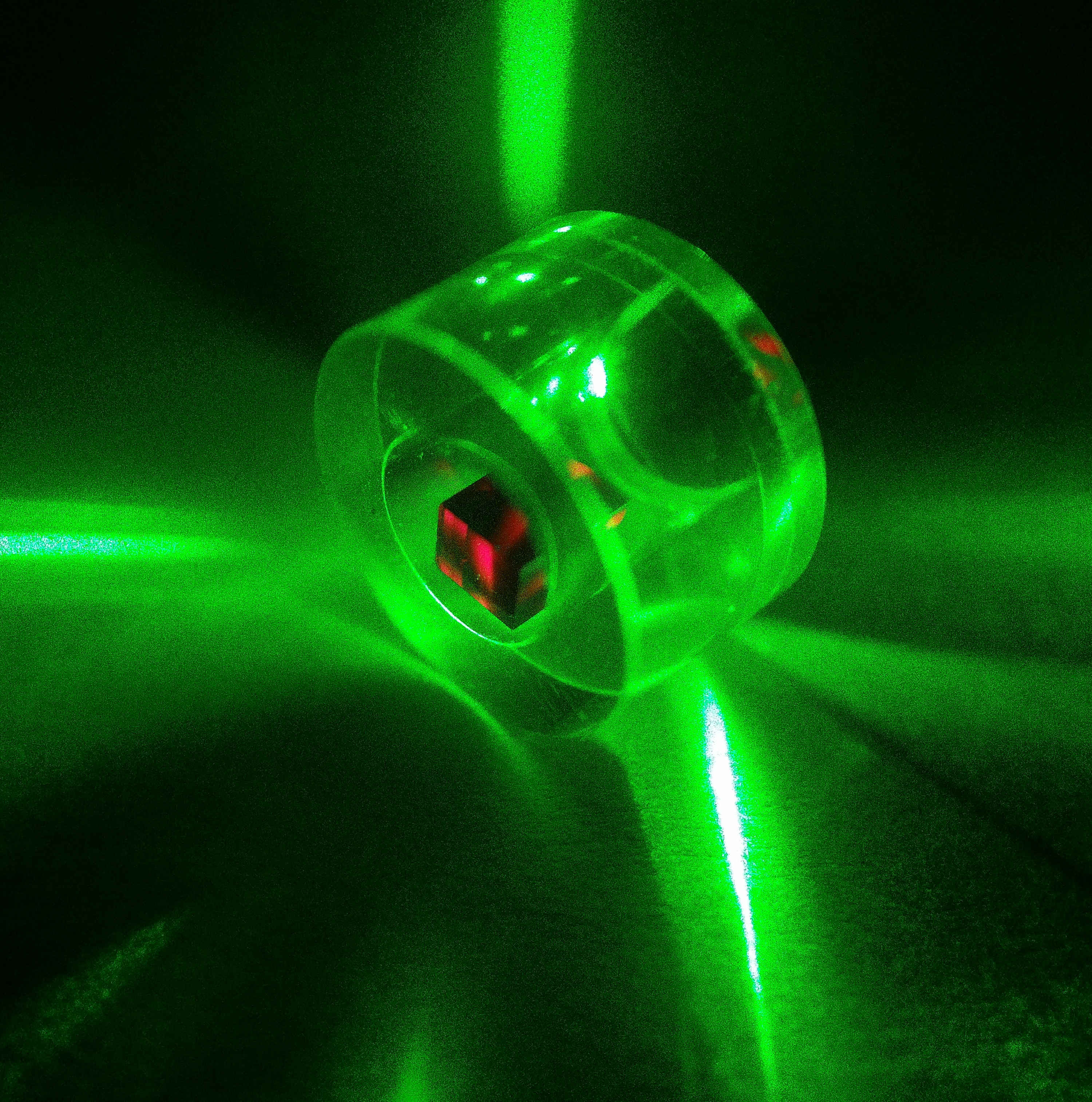
We built the first room-temperature diamond maser. Our work is powered by cavity quantum electrodynamics
The Breeze Lab is based in the Department of Physics & Astronomy at University College London. We study how matter interacts with electromagnetic fields: from masers in diamond and pentacene, to cavity coupled Rydberg atoms for quantum sensing.
Research
All publications →The lab began with masers and has grown from there: the same physics — spins and atoms strongly coupled to cavities and fields — now runs through our quantum sensing, simulation and instrumentation work.
Room-temperature solid-state masers
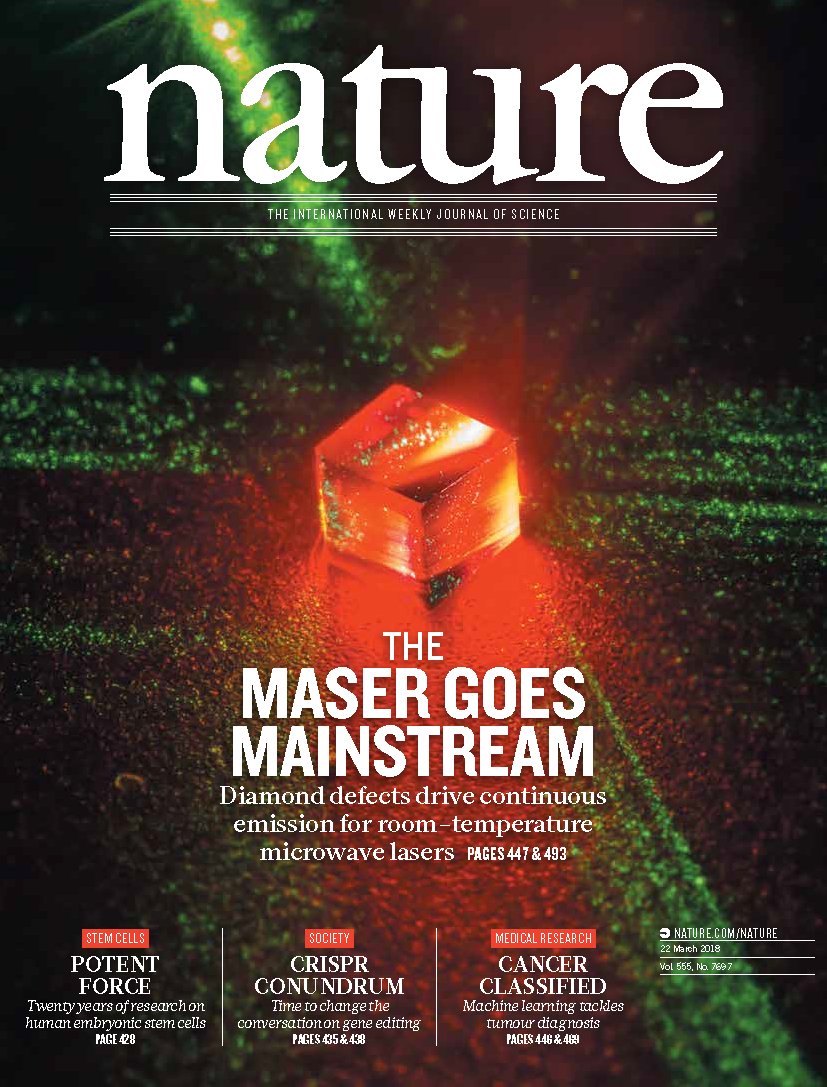
Where the lab began. We demonstrated the first room-temperature solid-state maser in 2012 and the first continuous-wave version, using nitrogen-vacancy defects in diamond, in 2018.
Rydberg cavity QED
Highly excited Rydberg states in rubidium atoms are coupled to high-Purcell factor microwave cavities, pushing them towards the ultra-strong coupling regime.
Cavity QED with helium and ytterbium
Extending our cavity quantum electrodynamics and Rydberg work to further atomic species.
Quantum sensing
Sensing DC and AC magnetic fields with solid-state spin defects such as nitrogen-vacancy centres in diamond and with molecular qubits such as pentacene.
Quantum sensing for biomedical imaging
Applying quantum sensing to biomedical imaging as part of Q-BIOMED, the UK quantum research hub for biomedical sensing.
Condensed matter simulation
Simulation of condensed matter systems from first-principles, underpinning and interpreting the experimental work across the group.
Microwave cavity design
State-of-the-art microwave resonators, from aperiodic Bragg-reflector photonic crystal cavities to dielectric resonators with optimised Purcell factors for masing and cavity QED.
Instrumentation
FPGA-based instrumentation for quantum sensing, measurement and control, built in-house.
Where it began
Two results set the direction for everything above — and the maser is not finished with us yet.
Latest from the lab
All news →Join the lab
We are always on the lookout for talented PhD students and postdocs. Funded positions are advertised here when open, and speculative enquiries are welcome at any time.